
General Industries
In general industry, material selection should be driven by abrasion resistance, chemical compatibility, dielectric performance, flexibility, service temperature, and total cost in use. Machine builders, robotics OEMs, and electrical manufacturers often design for long service life, continuous duty, tight routing, and exposure to oils, coolants, cleaning agents, vibration, and repetitive motion. This increases the value of high-performance tubing for cable and harness protection, robotic dress packs, sensor and instrumentation tubing, dielectric insulation, low-friction liners, chemical fluid handling, and formed components for harsh industrial equipment.
Select the perfect material for your application:

PTFE
Why use it:
PTFE offers ultra-low friction, broad chemical resistance, excellent dielectric performance, and high temperature capability. It is a strong choice where reliability matters in aggressive media or demanding thermal conditions.
Trade-offs:
It has a higher material and processing cost than many thermoplastics.
Typical general industry use case:
Cable liners, low-friction sleeves for moving assemblies, chemical transfer lines, instrumentation tubing, and insulation for demanding electrical components.

FEP
Why use it:
FEP combines good chemical resistance, strong dielectric properties, transparency, and low friction. It is useful where visual monitoring, smooth flow, or electrical insulation adds value.
Trade-offs:
It is less mechanically tough than ETFE and can be over-specified for broad protection tasks.
Typical general industry use case:
Transparent monitoring lines, sensor tubing, dielectric insulation, cable liners, heat shrink, and selected chemical transfer applications.

PVDF
Why use it:
PVDF offers a strong cost-performance balance with good mechanical strength, abrasion resistance, and thermal stability. It fits applications where durable tubing is needed without requiring the highest fluoropolymer temperature range.
Trade-offs:
It has lower temperature capability than PTFE or PFA and does not offer ultra-low friction.
Typical general industry use case:
Cable management tubes, semi-rigid protective tubing, sensor protection, fluid-handling lines, and durable components in electrical or automation systems.
ETFE
Why use it:
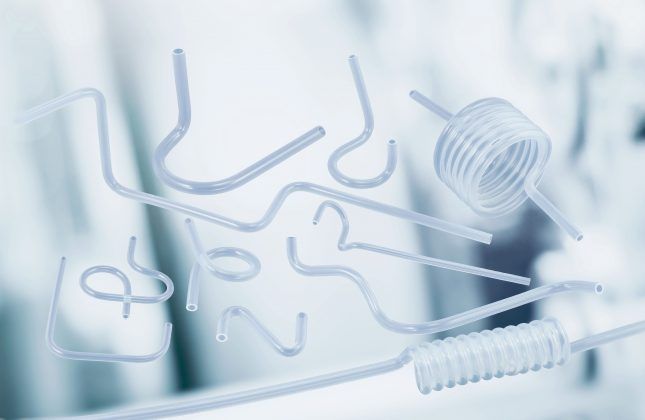
ETFE is mechanically strong, highly abrasion resistant, and well suited to thin-wall constructions. It is highly attractive for wire, cable, and protective tubing exposed to vibration, routing stress, and repeated motion.
Trade-offs:
It is stiffer than FEP and less suitable where transparency or very low friction is the priority.
Typical general industry use case:
Robotic cable and harness protection, wire insulation, machine cable routing, durable tube covers, and abrasion-resistant sleeves.
PFA
Why use it:
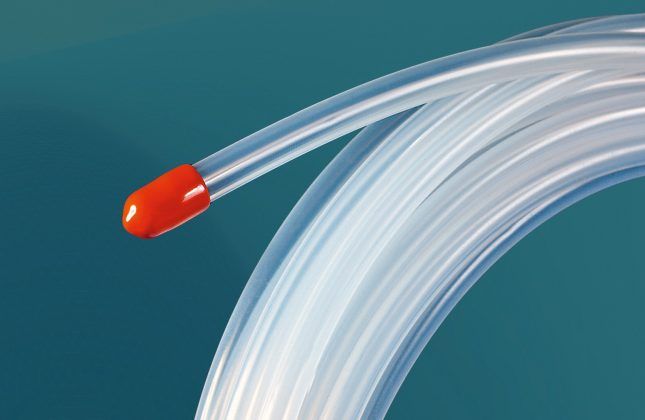
PFA delivers PTFE-like chemical resistance and temperature capability while also being melt-processable. It is a strong option when premium purity, chemical performance, and processability all matter.
Trade-offs:
As a premium material, it is best reserved for demanding rather than mainstream applications.
Typical general industry use case:
Chemically aggressive fluid-handling lines, high-purity process tubing, sensor protection, premium electrical insulation, and specialized tubing for harsh environments.
PEEK
Why use it:
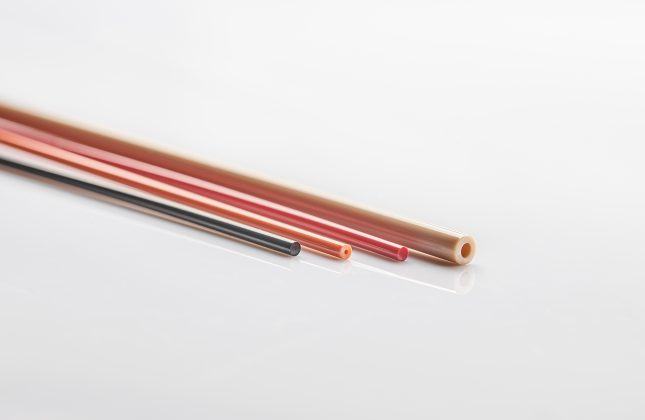
PEEK offers very high mechanical strength, wear resistance, dimensional stability, and temperature capability. It is most relevant where the design requires a premium engineering polymer for repeated stress or precision demands.
Trade-offs:
It is expensive and best suited to niche high-performance designs.
Typical general industry use case:
Specialized sensor tubing, structural tube components, cable protection, and demanding parts in robotics or electrical equipment.
Discover More:
We also make products for the following application areas: