
Automotive
Choosing between FEP, PVDF, ETFE, PTFE, PFA, and PEEK in automotive is about matching the material to the application based on temperature, abrasion, chemical exposure, flexibility, and cost. For Optinova, the strongest opportunities are in high-performance extruded tubing for cable and harness protection, sensors, low-friction liners, chemically resistant tubing, and compact underhood or e-mobility applications.
Select the perfect material for your application:

PTFE
Why use it:
Excellent high-temperature capability, ultra-low friction, and top-tier chemical resistance.
Trade-offs:
Higher cost and more difficult processing than melt-processable fluoropolymers.
Typical automotive use case:
Brake hose liners, aggressive fluid paths, and high-temperature low-friction liners.

FEP
Why use it:
Good chemical resistance, strong dielectric performance, transparency, and low friction.
Trade-offs:
Less tough than ETFE and usually too premium for broad high-volume use.
Typical automotive use case:
Sensor tubing, cable liners, and low-friction protective sleeves.

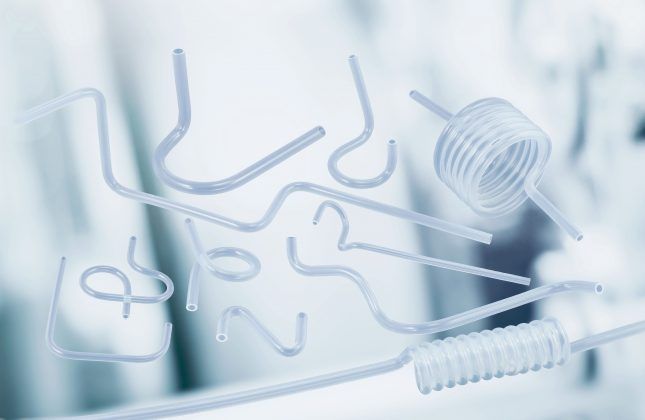
PVDF
Why use it:
Good mechanical strength, abrasion resistance, dimensional stability, and a solid cost-performance balance.
Trade-offs:
Higher friction and lower heat capability than PTFE or PFA.
Typical automotive use case:
Semi-rigid protective tubing, battery-adjacent components, and durable cable-management parts.
ETFE
Why use it:
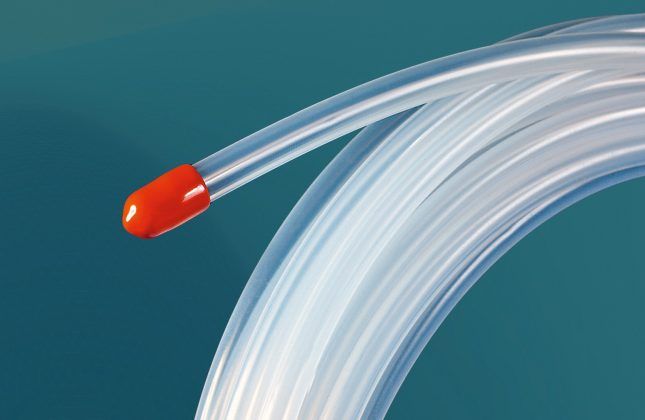
Very tough, abrasion resistant, thin-wall capable, and well suited to demanding wire and cable applications.
Trade-offs:
Stiffer than FEP and not ideal where ultra-low friction is needed.
Typical automotive use case:
Harness protection, wire insulation, and thin-wall underhood sleeves.
PFA
Why use it:
Similar chemical and temperature performance to PTFE, but melt-processable, making it attractive for precision extruded tubing.
Trade-offs:
Premium material, so it is mainly relevant for demanding rather than mainstream applications.
Typical automotive use case:
High-purity or chemically aggressive fluid-handling tubing, sensor protection, and premium underhood tubing.
PEEK
Why use it:
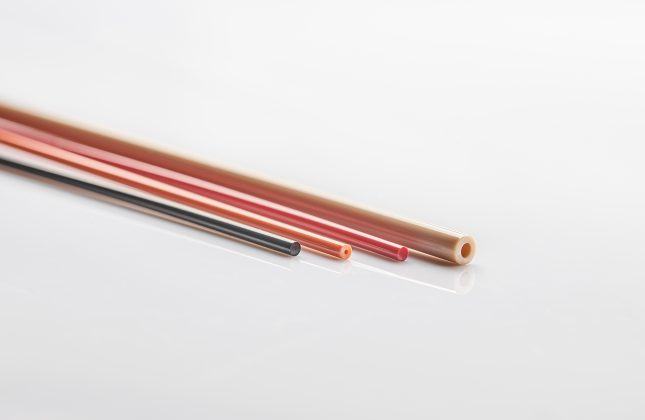
Very high mechanical strength, wear resistance, and temperature capability, with potential to replace metal in selected lightweight designs.
Trade-offs:
Expensive and more niche for tubing than fluoropolymers, so relevance is highest in specialized high-performance applications.
Typical automotive use case:
Specialized sensor tubing, lightweight structural tube components, wire protection, and demanding underhood applications.
Discover More:
We also make products for the following application areas: