Mandrels
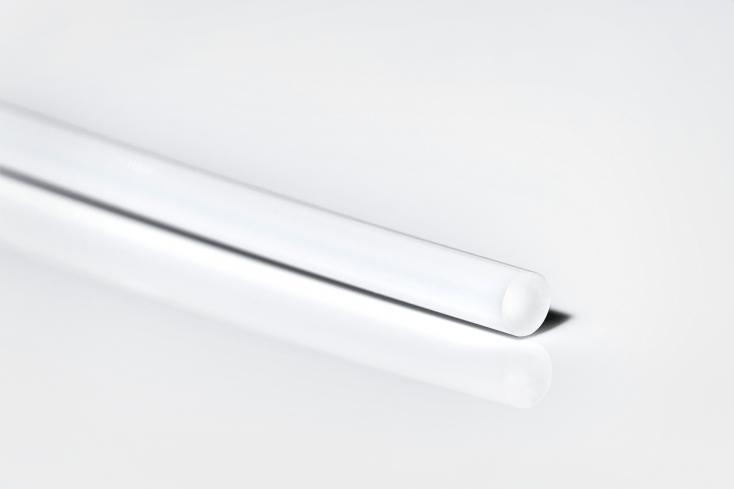
At Optinova, we understand that reliable mandrels are critical for achieving consistent diameter and roundness in catheter shaft production. That’s why we offer solutions tailored to your needs.
Curious to know how the Optinova Mandrels can improve your design?

Reliable Performance
Tight tolerances to enable consistent diameter and roundness for catheter shaft manufacturing
Material Options
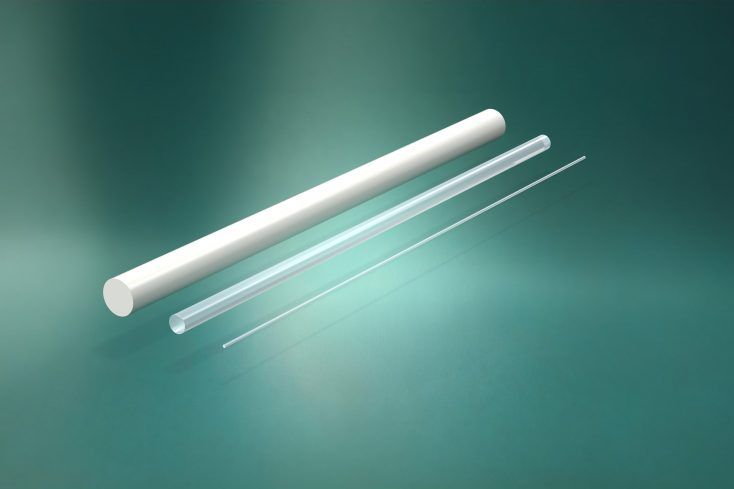
Optinova offers both PTFE and Acetal (POM) mandrels for various manufacturing needs and application requirements
PTFE Benefits
Ideal for small-sized high demanding applications. Low friction and shrinks in diameter when stretched, simplifying superior post-manufacturing mandrel removal. High temperature tolerance makes it ideal for post-processing operations that require elevated temperatures
Acetal (POM) Benefits
Ideal for medium-sized shafts, cost-effective for large volume production and has a smooth surface for easy removal
Customization
Apply additives for durability, lower friction, and other optimizations. Acetal available in single and multilayer options, with multilayer improving dimensional stability, flexibility and roundness
Applications
- Manufacturing aid for braided or coil-reinforced shafts
- Transport aid of ultra-thin wall delicate extrusions such as
catheter jackets or CRM lead components
Technical Specifications
- Feature
- OD Dimensional range single layer
- PTFE
- 0.5-5 mm (0.02-0.20”)
- Acetal (POM)
- 1 -6 mm (0.04-0.24”)
- Feature
- OD Dimensional range multi layer
- PTFE
- N/A
- Acetal (POM)
- 1 -6 mm (0.04-0.24”)
- Feature
- Tolerances
- PTFE
- +/- 0.025 mm (0.001”)
- Acetal (POM)
- +/- 0.025- 0.051 mm (0.001-0.002”)
- Feature
- Tensile strength at break
- MPa
- PTFE
- 20-34
- Acetal (POM)
- 40-70
- Feature
- Elongation at break
- %
- PTFE
- 200-400
- Acetal (POM)
- 10-200
- Feature
- Flexural modulus
- MPa
- PTFE
- 275-620
- Acetal (POM)
- 1400-3000
- Feature
- Hardness
- PTFE
- 55-65
- Acetal (POM)
- 85
- Feature
- Density
- g/cm2
- PTFE
- 2.17
- Acetal (POM)
- 1.3-1.4
- Feature
- Coefficient of friction
- °C
- PTFE
- 0.10
- Acetal (POM)
- 0.35
- Feature
- Melting Point
- °C
- PTFE
- 330
- Acetal (POM)
- 160-175
- Feature
- Min/Max Service Temp.
- %
- PTFE
- -240/+260
- Acetal (POM)
- -40/+100
- Feature
- Water absorption
- PTFE
- <0.01
- Acetal (POM)
- 0.2-1
- Feature
- ETO
- PTFE
- X
- Acetal (POM)
- X
- Feature
- Steam
- PTFE
- X
- Acetal (POM)
- X
- Feature
- Radiation
- PTFE
- --
- Acetal (POM)
- X
| Feature | PTFE | Acetal (POM) | |
|---|---|---|---|
| OD Dimensional range single layer | 0.5-5 mm (0.02-0.20”) | 1 -6 mm (0.04-0.24”) | |
| OD Dimensional range multi layer | N/A | 1 -6 mm (0.04-0.24”) | |
| Tolerances | +/- 0.025 mm (0.001”) | +/- 0.025- 0.051 mm (0.001-0.002”) | |
| Tensile strength at break | MPa | 20-34 | 40-70 |
| Elongation at break | % | 200-400 | 10-200 |
| Flexural modulus | MPa | 275-620 | 1400-3000 |
| Hardness | 55-65 | 85 | |
| Density | g/cm2 | 2.17 | 1.3-1.4 |
| Coefficient of friction | °C | 0.10 | 0.35 |
| Melting Point | °C | 330 | 160-175 |
| Min/Max Service Temp. | % | -240/+260 | -40/+100 |
| Water absorption | <0.01 | 0.2-1 | |
| ETO | X | X | |
| Steam | X | X | |
| Radiation | -- | X |
Medical-Grade Certifications

ISO 14001

IATF 16949

ISO 13485

ISO 9001
Mandrel Product Sheet
Tight tolerances enable a consistent diameter and roundness for catheter shaft manufacturing.